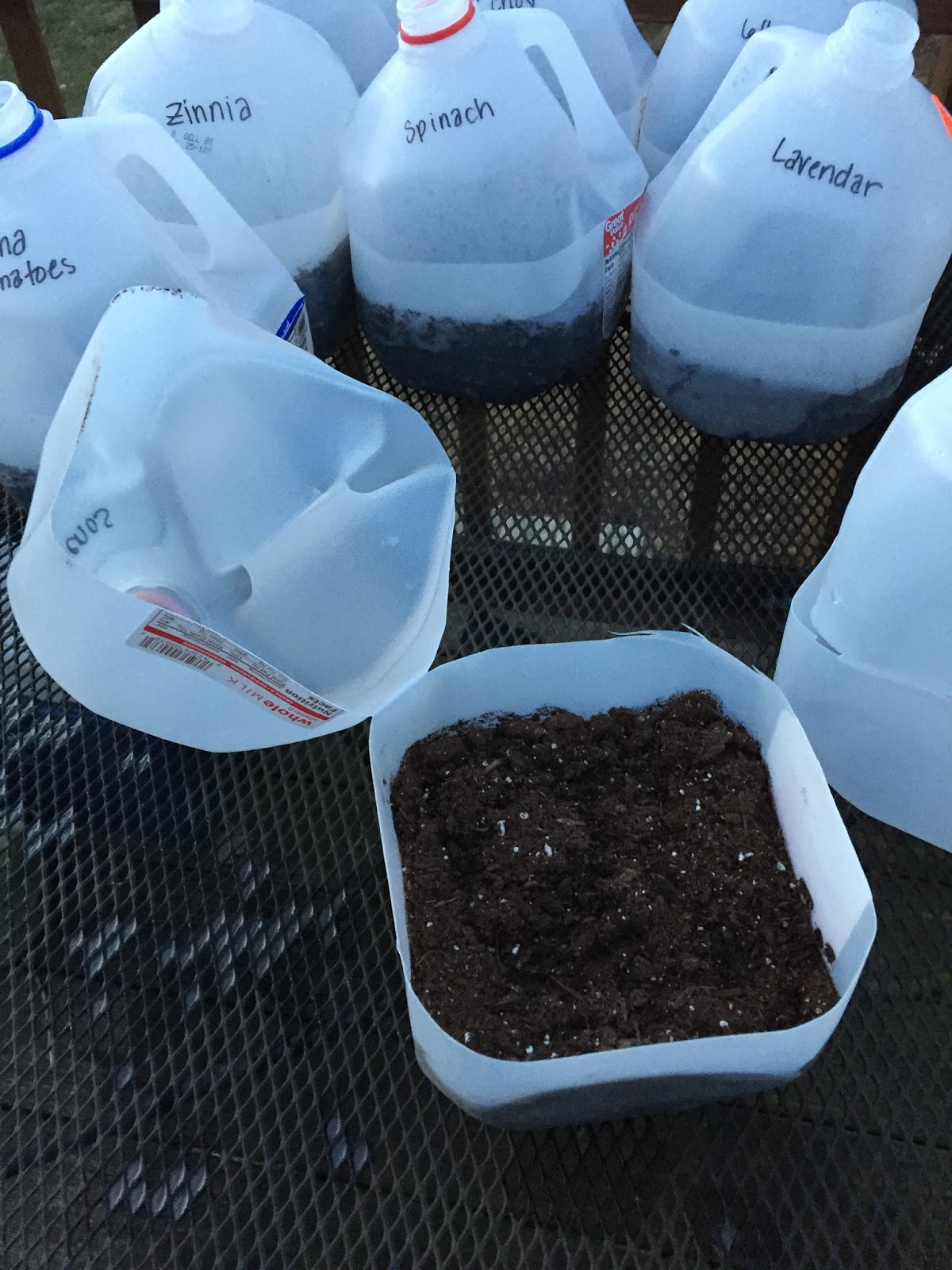
Wednesday, May 1, 2013

Write it Down


When I started having children.....actually before that, when I got married, my friend Shelley used to tell me, “Amy, write that down.  You’ll forget.”  
This week was my oldest son’s 18th birthday.  My youngest daughter, age 10 asked me, “Mom, what time was Aidan born?”  I said, “I don’t know. I think some time at night.”  Then the questions kept coming, what about this sibling, and this sibling, and what about me?  I said, “Well, I remember when you were born because I know they were joking around that I was going to be able to eat lunch.  You were born right after lunch.” 

Then I see on Facebook, everyone posting their kids birthdays, with the TIME they were born and I start to say to myself, “when were they born?  I can’t remember.”   

I was never one for writing stuff down, I mean, especially if it was something you didn’t want someone ELSE to know when you die or something.  I tried journaling and I have written down some significant things over the years that I really wanted to remember, but rarely.  And, I actually started blogging for two reasons, so that I could remember things and so that I didn’t have to give the same advice a gazillion times.  But I wasn’t blogging when I first started having children. Were there blogs back then?

I did take my friend’s advice for my children.  I kept little journals during my pregnancy for each one of them.  Some of them have more detail than others.  

This morning I rummaged through my book shelf and produced 4 little journals.  Elise was still in bed and I said, “Okay, Elise, Aidan was born at 2:28PM. I was way off on that one.  Tyler was born at 9:39PM. Look, Daddy wrote that down.  That’s his handwriting.  Avanell was born at 11:21PM. And, you were born at 12:20PM. See, just after lunch.”  

Then I read an excerpt to her, “Elise is the sweetest baby.  We all enjoy her so much.  All her characteristics just make you want to hug her and play with her.”

To which she replied with a teary smile, “Thank you for writing that down.” 

Saturday, March 30, 2013

What Godspell taught me about Jesus


Whenever I see a movie or in this case, a play, I think about it for a few days, that is, if it is any good.

We saw Godspell last night at a small venue in Putnam, CT called Complex Performing Arts Center.  The worship leaders at our church, Living Hope Christian Church, acted in and directed the play.  I am humbled to say, I have been brought near to tears just thinking about the play today.   

The content itself was very familiar to me, the Gospel of Matthew.  I knew the stories and the major plot, of course. There were characters in the play who were regular people/Jesus’ disciples, and even at times acting as Christ’s persecutors, betrayers and killers.  Jesus, of course, was the main character.  

Godspell really showed me Jesus’ humanity and friendship.  He is every believer’s close and intimate friend.   

As the play went on, the same people were following Jesus consistently.  He told His parables and they acted them out.  He was very kind, loving, and understanding to all, no matter what their behavior.  He was welcoming to sinners and kindly corrective.  He was accusatory towards the religious elite. There was also plenty of humor. 

The level of intimacy between Him and these disciples/followers increased throughout the play. I felt uncomfortable on occasion with the intimacy of some of the women with Jesus.  I realized this was my own fleshly mind getting in the way.  This was Jesus!  Jesus’ relationships were all pure, although He was a man, he was also God.  Jesus really did let a prostitute touch him.  Jesus probably would have sang songs with Martha or Mary or other women as well.  He did touch people often, and they touched him.  Jesus was more than their friend.  They followed Him; they worshiped Him; there was nothing inappropriate about it.  He was God in the flesh. In the play when Jesus was crucified, the people were weeping at the foot of the cross but they were literally on his legs, touching him.  I wonder now if the people at the foot of the cross were actually, in fact, touching Jesus’ feet.   

I realized that up to this point, I have had a very cordial, distant way of thinking about Jesus.  As I started thinking through the play, I found myself teary-eyed thinking about Jesus as my close friend.  I have been thinking about Him and what it would be like to “hang out” with Him.  How I would I have felt if He were killed before my very eyes, especially after witnessing His perfect goodness and innocence? What will it be like to be with Him in Heaven?

Normally, I would have major issues with a play that leaves Jesus dead, but since we saw it on Good Friday, I was perfectly fine with it.  I realize now, if He had risen in the play, I probably would have continued along with my cold/cordial thoughts of Jesus as a risen unapproachable radiant being, instead of on His life, His humanity and His relationships with His followers.....and with me. 

Greater love has no one than this: to lay down one’s life for one’s friends. - John 15:13

Wednesday, March 27, 2013

Not-To-Do List?

I commented recently on a friend’s business Facebook page regarding a video about, prioritizing; making a “not to do” list.  The speaker made the point that sometimes children approach with things that are clearly, not something you are going to interrupt your time to do.  My comment was that sometimes the unimportant things your child approaches you with, are really important to them!  I really do agree with this man, because with all that I have to do, I do routinely say, “no, we are not doing that right now, to my child.”  But sometimes I look at the activity and find it unworthy of my time.....then I look at the CHILD and I say, “okay, let’s do that.”

Children are important.  I think that many parents are at a disadvantage because their children are away from them 8 - 10 - 12 hours a day. How can anything in the remaining 2-4 hours be unimportant if it means spending time with your child?  

I feel like I have the advantage.  I homeschool.  I am with my children for most hours in a day. Please don’t think that homeschool kids and moms are home 24/7. My kids do go out to activities, visit friends, and on field trips with me and on their own, but I don’t have the limited time with my kids that many parents have.

I do a lot of things.  I own 4 dairy goats that must be milked each morning and evening along with other care that they need periodically.  I make my own soap and cheese. I have chickens and ducks.  A garden in season. I run a non-profit homeschool organization of 250 families.  And, I homeschool my children.  People ask me, how do you do it all?  I would say the answers are:  routine, delegation, flexibility, and multi-tasking. 

Routine:  
I do have an every day routine.  Goats are milked morning and evening at the same time (roughly) every day.  Chickens and ducks are fed and watered as well.  I eat breakfast.  Check email.  Make my bed.  I shower and get dressed every morning. The dishes are washed and put away. I have homeschool time with 10 year old.  Dinner is prepared (or reheated.) These things happen every day.  

Delegation:  
I have trained my kids to do basic chores.  I have not succeeded in making them do them on their own, but they will do anything I ask them to do with a relatively good attitude.  I delegated putting the dishes away to my daughter this morning while I showered.

Older children are responsible for their own school work.  Much of this depends on them.  Not all of them are the best time-managers.  Some things are undone, some things are behind, and some things they are ahead on.  I am trying to re-instill routine in them to get them on track with everything, but they are old enough now to do school on their own and they do.  One of them is in college and doing well; she is completely on her own.  Two of them are taking a CCRI class and they complete their assignments without my intervention. This shows me that much of their schooling can be delegated to them confidently.

Many of the events, tasks, and planning for the homeschool organization I run, are delegated away.  I merely need to make sure that the events are delegated to trustworthy volunteers.  I said recently to a speaker at our Conference that I was nervous about it and she said in jest, “oh, is that tomorrow?”  That was not something I was concerned about.  I find people I can trust and I give them a task and then trust that they will do it.  No one has failed me yet (that I can recall!)  Church events are the same, if I ask someone to cook for a Fellowship lunch, I just trust them to do so.  If I trust someone to cover games for VBS, I am confident they will. Again, no one has failed me yet.

Flexibility:
Today was a flexible day.  Homeschool routine with 10 year old was postponed so that I could do some things that become urgent at this time each month, namely, the homeschool organization newsletter and paying my bills.  I was awaiting a few items for the newsletter and kept putting my daughter off.  Fortunately, she is very good at self-entertainment, and in an educational way. 

And Multi-tasking:
I managed to do 1/3 of my daughter’s schoolwork with her while I was waiting for someone to call me back about the newsletter (they forgot about me!) and I paid my bills while I was waiting for another call. Once the newsletter was taken care of and bills were paid, my 10 year old and I went to run errands and to the library.  Now school is done.  It is later than usual, but today had to be a flexible day and I am happy to have completed some of it in what I originally thought was going to be wasted waiting time. 

So, in re-reading this, I am thinking that I sound really unorganized.  There is truly a balance between structure and flexibility, especially when things are ever-changing. I often wonder how women and men who work outside of the home do it.  How do YOU do it?  I want to ask.  How do you spend quality time with your children?  When do you go to the dentist?  When do you do your errands?  When do you make your dinner?  The structure of having a job outside the home leaves little flexibility for those things that you just can’t put off in life.....some things just can’t go on the “not to do” list.

(Now, to be fair, I should have my next post be a not-to-do-list!)


Monday, March 25, 2013

Spelling and Vocabulary and Writing


It seems like there has been a lot of advice and comfort coming from stories, stories of success or unexpected outcomes.  I have been encouraged by stories myself a lot lately, and been telling my own.  I think I will blog some of my stories to see if maybe someone may benefit from them as well.

I will apologize at the outset that this is not smooth story.
Having a homeschool graduate, a senior, and a junior, I feel like I can say with some authority, “don’t worry about it.”  That’s not to say that I am not doing my own worrying about what lies ahead. But today I am talking about spelling, vocabulary, and writing.  There have been a plethora of questions, conversations, and concern regarding spelling and vocabulary, most specifically, and that naturally ties into writing as well.   

What did I use for spelling and vocabulary curriculum?  The answer is many things but nothing consistently.  This is mainly a story about my boys education through spelling, vocabulary and writing, a potentially worrisome route with a surprise ending. 

For Daughter 1, my oldest, we did Spelling Workout, these were workbooks and I liked the incremental way that they focused on similarly spelled words.  She probably did the first 4 -5 books. She also read at age 4 and taught herself cursive in first grade. Classic first child. 

Then came Son 2, although he was reading at age 6, he cried about any writing until he was about 9 years old, almost like it hurt to write. I finally asked a friend with a degree in early childhood development about handwriting and some possible solutions. Her  short answer was, “don’t worry about it.”  She asked me, “Amy, how often does your husband write?  How is his handwriting?  How does he generally communicate with others?”  The answer was, of course, he types emails and IMs, and on rare occasions, will hand write a note.  His handwriting isn’t that great.  Come to think of it, most doctors have notoriously bad handwriting.

So, I didn’t worry about it.  He still read and did math and wrote short answers for other subjects, but most of our learning was through reading and listening, so writing didn’t come up much.

Then Son 3 did not read until he was almost 10. So there was no writing, except some phonics, until then.  Fortunately, when he did start reading, it was right at grade-level, so we could dive right into writing.  His handwriting was (and still is) horrible, but legible.  I don’t worry about it.  

We joined a co-op, when the boys were probably 11 and 12.  There was a writing class.  For the first in-class assignment, Son 3 wrote, “I can’t spell” on his paper  The teacher showed me the assignment, and I just sighed.  I was worried!  

I went home and read Ruth Beechick’s “The Three R’s” book, the writing section, and Susan Wise Bauer’s book, “Writing with Ease”.   Both recommended dictation.  I sat the boys down at the kitchen table and told them.  “I am going to read something to you and you are going to write it down.  You may correct your work from the original when I am done and you can ask me to spell any word you don’t know.”   I read to them a Shel Silverstein poem (can’t remember which one),needless to say, they were chuckling as they wrote.  

It was like a miracle.  All it took was 2-3 dictation lessons for them to realize, “Yes, I can spell reasonably well, and I can always correct it if it is wrong.” , “I can easily put what is in my head onto paper.” and “Hey, writing can be creative and fun.”  Shortly afterward, Son 3 wrote a novel about my husband.  The title was, “Stephen in Fantasy World”.  Friends, relatives, and acquaintances were main characters.  It was quite humorous. The handwriting was horrible, but he brought it to me regularly to check the spelling and make corrections before showing it to his co-op teacher.  

I should mention that Boy 2, handwriter-with-tears, was still not great at getting much on paper, but his handwriting ended up being BEAUTIFUL!  He may not have had much to say, but he  could be a calligrapher.  

I should also mention Daughter 4 here (currently age 10).  She is another struggling reader, auditory learner.  If she hears it, she remembers it. Dictation was also crucial to her learning.  She seemed to turn a corner when I started spelling by dictating words to her.  I say it, she says it back, and spells it.  The combo of hearing and writing has, been the key to her finally jumping from sounding-out to some whole-word reading.  Whew.  I was worried for a while there. (Just a note, that I got this phonics dictation idea from the blog at readinghorizons.com)

Back to the boys’ story.  

I bought Sequential Spelling.  My boys grew quickly bored with it.  

I bought Vocabulary from the Classical Roots.  It was okay. I think they may have each completed a book.....maybe.  

I bought some Sadlier-Oxford vocabulary workbooks.  We had those in school and I loved them.  But my boys did not get the subtle differences in meanings for words that seemed obvious to me and Daughter 1. 

Meanwhile, Daughter 1 was (is) an avid reader and was working through Wordly Wise vocab books for some grades and Vocabulary from Classical roots for others. She was constantly reading.  Every free moment.....reading, reading, reading.  And I think that IS the key to spelling AND vocabulary AND writing.  

We were also reading a lot as a family.  As part of school each day, I read new and classic literature, history, historical fiction, science, etc. aloud to the kids.  My husband read to the kids at night.  Eventually, the boys started reading for pleasure and for school assignments as well.

When the boys were about 13 and 14, I decided to start a boys‘ writing class with them and a few of their friends.  I used the curriculum Write Shop. The accountability and competition of writing with friends really spurred them on.  I had read the book “Boy Writers” by Ralph Fletcher and it gave me different goals and expectations for the class.  We were not going to be discussing feelings here.  I have to say that I was pleasantly surprised at the material that was eventually produced.  All of the boys really improved over the course of the class and gained confidence in writing.  

In the following years, they had writing assignments for history and language arts, but honestly, they did not produce much. 

At ages 15 and 16, I did do a short SAT essay prep class with them and two other homeschool students.  This was a new level of difficulty, timed essays.  They did fine.  Their reasoning was clear, their spelling mostly correct, and their vocabulary commendable.

Since then, they have not done much formal spelling, vocabulary or writing, aside from the “you must use correct spelling and grammar on Facebook” ultimatum.  Did you ever think of spell-check as a good spelling teacher?  A red line warning you each time you spell something wrong, seems to be a good teacher to me.

So, how are they doing now? 

I have caught them reading the dictionary, vocab flip books, and cartoon vocab books on their own.

They scored “okay” on their PSAT and SATs. Boy 3 may improve his scores, he still has a few more tries at it.

They scored very well on the Accuplacer, placement test for CCRI.

They are both taking a CCRI Intro to Lit course, heavy on the reading and the writing.  They have both said how much they really love it and have completed all their assignments without (many) reminders from me.  I will have to update with a grade, but they are holding their own in a college class at the ages of 16 and 17.  

Perhaps they could have gotten better scores on their SAT (one still may), If they did “all the workbooks”.  Despite or Because of the ad-hoc spelling, vocabulary and writing education they have received, they like reading, they like writing, and they like words, which I think is key to them continuing to pursue these subjects as they continue their education out from under my guidance.  

Not sure what we learn from my story, but I guess it is: if your child is a language lover let them go with it.  If they are not, try something else.  Read, read, read, either them to you or you to them.  And......don't worry about it.


Saturday, May 26, 2012

Tomato planting tips!

Well, I have been negligent in my blogging. I really wanted to keep track of my garden through my blog and share with others what I do.....just because people ask me a lot of questions, even though I consider myself a novice gardener.

Anyway, if you read my transplanting post, my seedlings have been inside up until a few weeks ago.  Once the weather started getting nice, I put them out during the day in a somewhat sheltered spot.  Make sure they are well-watered or they will dry out and wilt quickly in the sun!  Wind is a huge factor too....they can get wind-burned if you aren't careful.  Ask me how I know.

This week, I finally actually put my seedlings in my garden.  They were probably outside for 3 days, then back in for 5 days because it was pouring out.   Then the weather finally normalized and they were out for 5-7 days straight.  I left them out at night after that until I was ready to plant them. 

I wanted to document some things I have learned over the years about planting tomatoes. 

1)  Dig a hole about 8-12" deep.  Put a handful of Epsom Salt in the bottom of the hole.  I don't know what this does, but the one year I did it, I had fabulous tomato plants.  We'll see if it works again.

2) Snip off the lower branches of the seedling and plant all the way up to the remaining branches.  The plant will root all along the stem and this gives a nice deep root system to your plant.

3) Use sturdy tomato cages.  I have used cheap ones and they fall over.  I have built my own wooden ones, but if there is any disease in your soil or tomatoes, this will cause it to spread.  I have used single stakes but I felt like I was constantly trying to keep the tomato tied to the stake.  Use sturdy tomato cages.

4) Borage is an excellent companion plant for tomatoes.  I always try to plant some with my tomatoes and it seriously cuts down on Tomato Horn Worms!  I have had years where I have pulled up to 100 THW off of my plants, but every year I plant borage with my tomatoes, I have pulled off probably under 10!   

5) Mulch with hay or something similar around the base of your plants and bottom-water them.  Water splashing up from the soil can spread any diseases up into your plant!  Rain is fine, but if YOU are going to water, do it at the base, not with a sprinkler or from the top.  My garden is conveniently (inconveniently?) located next to my goat shed, so my plan is to pour out the leftover water each AM at the base of each tomato.  One year we (and everyone else, I think) had a MAJOR wilt problem.  We got zero tomatoes that year.  It was a very rainy summer and the water just splashed and spread the wilt up on the whole plant.  In subsequent years, the wilt remained in the soil.  I did a lot of research and found out how to curtail it; mulching and bottom-watering seem to be the trick.  I even started a new plot just to get my tomatoes into fresh soil.  This year I am going back into my old plot - after about 5 years and that many seasons of compost (and mulch and bottom-watering), I am hoping they will do well.

6) The last of my tomato tips.  One year it was pretty late in the season and all of my tomatoes stayed green.   I found out that if you cut a semi-circle into the soil, about 6-12" from the base of each plant, you can force the tomatoes to turn.  I would only do this if you have multiple fully-formed green tomatoes on your plant that have been that way for a looong time.  I am not sure if it would hinder the production of further fruit...but if everything is green and it's getting late in the season, you can do this multiple times to get the fruit to turn.  Don't cut all the way around the plant, and I wouldn't do it more than once a week or so.

That's all I have for now.  I hope to add pictures....maybe at some point.

Friday, April 6, 2012

Starting seeds and transplanting

I received free seeds from the URI cooperative extension.  Every year they give seeds (with financial help from Job Lot) to community and educational gardens.  Since I homeschool, we qualify as an educational garden....and I would say that it has been educational for my children.  They have all been interested and involved at some point in my gardens.

I started my seeds about mid-March.  I don't like to start them much earlier than 8 weeks before they can go out.   I usually start hardening the seedlings off around mid-May and get them in the ground the end of May or 1st week of June.  That might sound late, but I am paranoid that I will lose all of the time and investment in my seedlings by putting them out too soon.  I do direct-plant as soon as the charts say we have had our last frost, but for my seedlings, I wait.

I start my seeds in little "Jiffy" packs that you can buy at Walmart or Job Lot.   I just follow the directions on the box/kit.  I don't buy a kit every year, I just re-use the tray and buy new Jiffy pellets.  You soak the pellets and they expand to 1" netted soil chunks.  I put the seeds in each pellet and put the whole tray under a florescent work light on a shelf in my basement closet.  The light has one blue and one warm bulb.  I may eventually use two lights on different shelves or side by side.  I used pipe-cleaners to secure the light to the bottom of a metal shelf.

Just a florescent work light secured under a metal shelf.

I know they would germinate faster if they were warm.  I am thinking of buying a warming pad to put under them just for germination.  

Once the plants are large enough.  Which for me is about 4 weeks in for tomatoes, they are ready to transplant.   I have a picture of the tomatoes, but they are on another camera with dead batteries, I will add it later.

These are some herbs that I am starting.  I confess I have never had much success with herbs from seeds, but I think it was because the seeds are so small that i was afraid to thin them once they germinated.  I did thin these down to one plant by clipping away others with a pair of scissors.


I transplant my plants into plastic containers.  These are sour cream containers that I save for just this purpose. I washed all the containers with a little bit of bleach water to sterilize them.  I don't like peat pots because they wick-away the moisture from the soil.  I have used them several times and almost lost seedlings because they became too dried out.  The plastic keeps the soil and the plant moist for much longer.

I do put 2 holes in the bottom of each container for proper drainage. Also, write the name of the seedling on the container with a sharpie....you will not remember which is which of tomatoes and peppers, unless you plant all of the same kind (I have 3 kinds going.)


 I plop a seedling that is ready, right now just tomatoes, into each container and then fill around it with potting soil.   You can trim off the lower leaves on a tomato and cover the stem up to the first true leaves in soil.  Roots will come off the stem all the way down, giving your plant a good root system.   You can do this again when you put them in the ground.

Put a seedling in each container.


Fill around each seedling with potting soil. 


I put them in a larger container (I used a plastic salad container) to catch any drainage and to allow for bottom watering later on.   I watered them generously.


Put in drainage container and water generously.

And back under the light they go.


Put back under their light.

Sunday, April 1, 2012

My Chai

Well, I originally started making my own Chai from a "pin" that I saw, but now the link says that that page does not exist any more.  I guess credit isn't necessary because I have made so many changes to the recipe, but here's the link if it is ever working again.
http://www.inwardfacinggirl.com/blog/2011/11/1/give-it-a-whirl-krishna-tea.html

The recipe was good, but it called for a lot of ground spices and loose tea which ended up as a big pile of sludge once you strained the tea.  It was actually difficult to strain.  It also called for a few whole spices, which were thrown away with the sludge spices.  I thought, what a waste, couldn't these spices be reused?  Well, yes, they can.  I have been using mostly whole spices in tea balls to make this recipe.  So far I have reused the whole spices in tea-balls about 5 times and the flavor is still good.  I rinse the tea-balls with clean water after each use.  Since the recipe does have milk, I don't want that sitting in with the spices.


So, this is how I make the perfect cup of Chai tea.

Place in pan on the stove:  3 c. of milk and 3 c. of water.  Bring to a slow boil.  You should stir it often or the milk will start to stick to the bottom of the pan. 


Put into two tea-balls heaping portions of:
(The teaballs are those two little mesh things.  I got them at Walmart.)
1 tsp. of whole peppercorns
1 Tbsp. of whole cloves
1 tsp. of whole allspice
1 tsp-size chunk of peeled whole ginger root.

It doesn't matter which spices you put together, they just won't all fit in one tea-ball.  I'll be honest, I didn't really measure very well.  1 Tbsp of peppercorns was too peppery for me, so that I did decrease, I know.

Once the milk/water mixture is super hot, add:

5 Tbsp. sugar (you could decrease this and add another sweetener before drinking to your taste.)
4 regular teabags
1 tsp. cardamom (I didn't have this for a while and the Chai was okay, but it definitely is worth having.  It is very expensive, but I got some from Vitacost with my $10 refer a friend code.) 
1 tsp. cinnamon
The two tea-balls with whole spices in them.


 Keep it at a barely boil or low boil for about 5 - 6 minutes.  You want it really hot to get all the flavors. I tried making a single cup by pouring boiling water over the two tea-balls and adding lesser amounts of the other spices/sugar and the water just wasn't hot enough.


Pour the liquid through a strainer.  I'm not sure I really must do this anymore, I could just fish out the tea-balls and teabags and leave the cardamom and cinnamon in.  Rinse the tea-balls in water.  You may even want to carefully open them and rinse off the spices inside (I have not and it has been fine.)  I put the tea-balls with whole spices in a dry cup to use another time.  Throw away the teabags (I'm not that frugal.)


Drink your nice cup of hot Chai!  Enjoy!

You can put any extra Chai in a container in the fridge to heat and drink at another time, or share a cup with a friend. 

Here's the quick-look / print recipe:

Perfect Homemade Chai by Amy

Place in pan on the stove:
3 c. of milk
3 c. of water.
Bring to a slow boil, keep stirring.

In two tea-balls place heaping portions of:
1 tsp. of whole peppercorns
1 Tbsp. of whole cloves
1 tsp. of whole allspice
1 tsp size chunk of peeled whole ginger root.

Once the milk/water mixture is super hot, add:
5 Tbsp. sugar  
4 regular teabags
1 tsp. cardamom
1 tsp. cinnamon
The two tea-balls with whole spices in them.


Keep it at a barely boil or low boil for about 5 - 6 minutes. 

Pour the liquid through a strainer or fish out the tea-balls and teabags and leave the cardamom and cinnamon in.  Rinse the tea-balls in water.  Throw away the teabags.  Refrigerate any extra Chai and reheat as desired.